Do Air Purifiers Help with Allergies?
Indoor environments frequently trap airborne particulate matter at concentrations up to five times higher than outdoor air. When you inhale these microscopic irritants, your immune system can mistake harmless proteins for dangerous pathogens, triggering mast cell degranulation, histamine release, and immediate airway inflammation.
How Indoor Air Quality Affects Respiratory Health
Particulate matter is categorized by size, with PM10 (such as pollen) and PM2.5 (such as combustion particles and fine dust) posing the greatest risks to your respiratory system. These microscopic materials bypass natural nasal filtration systems, settling deep within your bronchial tubes and lungs, which leads to chronic swelling, coughing, and systemic fatigue.
To reduce this persistent physiological strain, physical removal of these suspended particles is essential. According to established medical research, decreasing the baseline particle load in your home directly correlates with reduced airway hyperresponsiveness and a lower reliance on rescue antihistamines.
The Direct Impact of Air Purifiers on Microscopic Allergens
Mechanical air purifiers pull contaminated indoor air through fine, dense fibrous grids, capturing suspended particulate matter and exhausting clean, scrubbed air back into the room. This continuous cycle prevents allergens from settling onto soft surfaces or recirculating throughout your living spaces.
However, an air purifier is not a magic cure. It cannot extract heavy allergens that have already embedded themselves deep within your carpets, heavy drapes, or mattresses. To achieve noticeable therapeutic relief, mechanical air filtration must be combined with regular physical cleaning, such as deep vacuuming and hot-water laundering.
Understanding HEPA Filtration for Allergen Reduction
High-Efficiency Particulate Air (HEPA) filters are the gold standard for mechanical air filtration, utilizing physical mechanisms rather than chemical reactions to sanitize your indoor breathing zone.
True HEPA Standard: Capturing 99.97% of 0.3-Micron Particles
A certified True HEPA filter must capture at least 99.97% of airborne particles measuring exactly 0.3 microns in diameter. This precise measurement represents the Most Penetrating Particle Size (MPPS), which easily evades standard mesh filters. HEPA filters catch these particles through a combination of diffusion, interception, and inertial impaction.
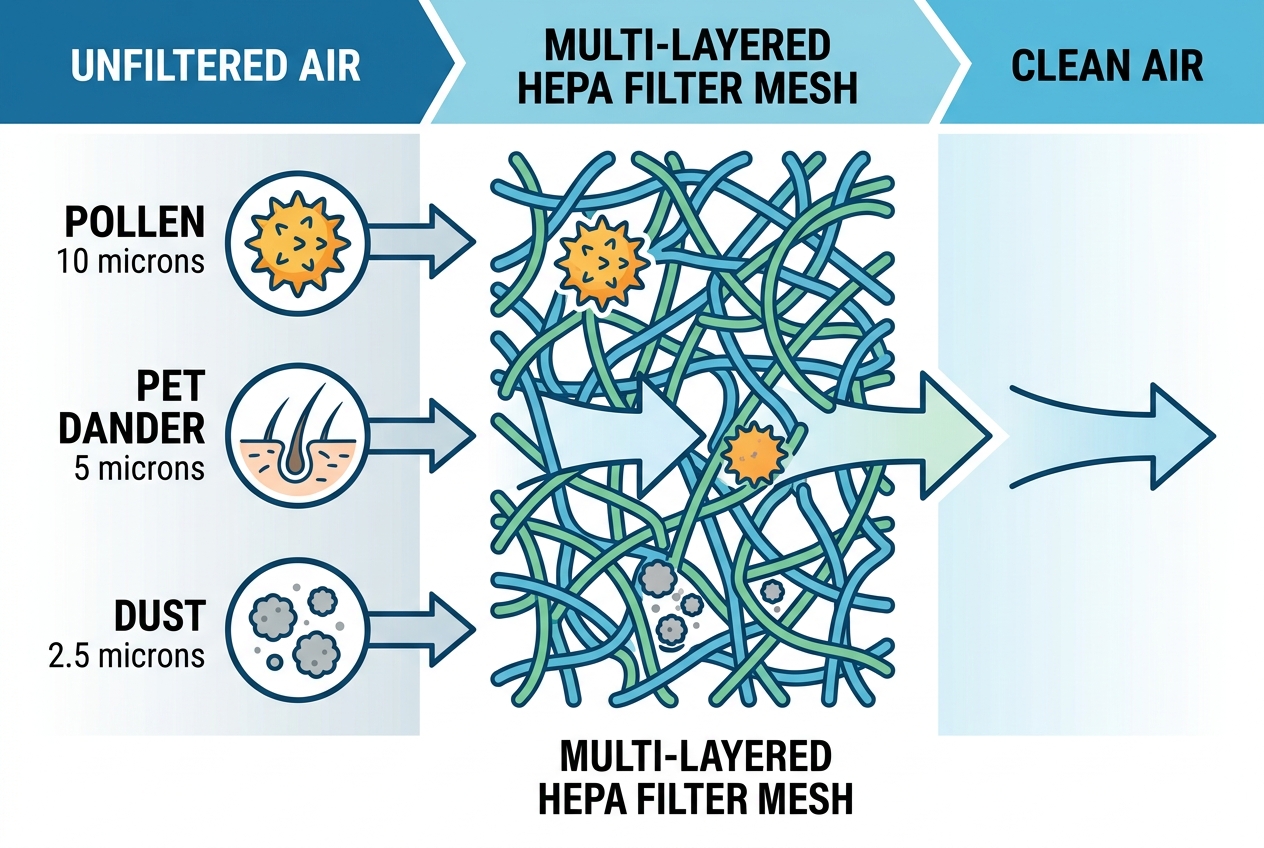
Standard household furnace filters only trap larger debris like lint and coarse hair, allowing fine allergens to pass right through. A dedicated air purifier for allergies acts as a targeted filtration hub, continuously scrubbing the air to remove micro-fine irritants that typical HVAC systems miss.
Evaluating CADR and Room Sizing for Real-World Efficacy
The Clean Air Delivery Rate (CADR) indicates how many cubic feet of clean air a purifier delivers per minute. CADR ratings are measured separately for smoke, dust, and pollen. To ensure adequate air exchange, select a unit with a CADR rating that matches or exceeds two-thirds of your room's total square footage.
If you run a low-capacity purifier in a large, open-concept living area, the air exchange rate will be too slow to outpace incoming pollutants, rendering the device ineffective. For consistent relief, aim for a minimum of four to five complete air changes per hour (ACH) in your designated room.
Choosing the Best Air Purifier for Dust, Pet Dander, and Pollen
Different allergens have distinct physical characteristics, requiring specific mechanical components to target them effectively.
Combatting Indoor Dust Accumulation
Household dust is a complex mixture of sloughed skin cells, soil, and microscopic synthetic fibers. Because dust particles are relatively heavy, they settle out of the air quickly. To combat this, the best air purifier for dust needs a high-velocity fan to capture these particles while they are still floating, alongside an easy-to-clean pre-filter to catch larger debris before it clogs the expensive HEPA stage.
Eliminating Airborne Pet Dander and Saliva Proteins
Pet dander consists of tiny, lightweight skin flakes that carry irritating saliva proteins like Fel d 1 (from cats) or Can f 1 (from dogs). These ultra-light particles can remain suspended in the air for hours and easily stick to walls and clothing.
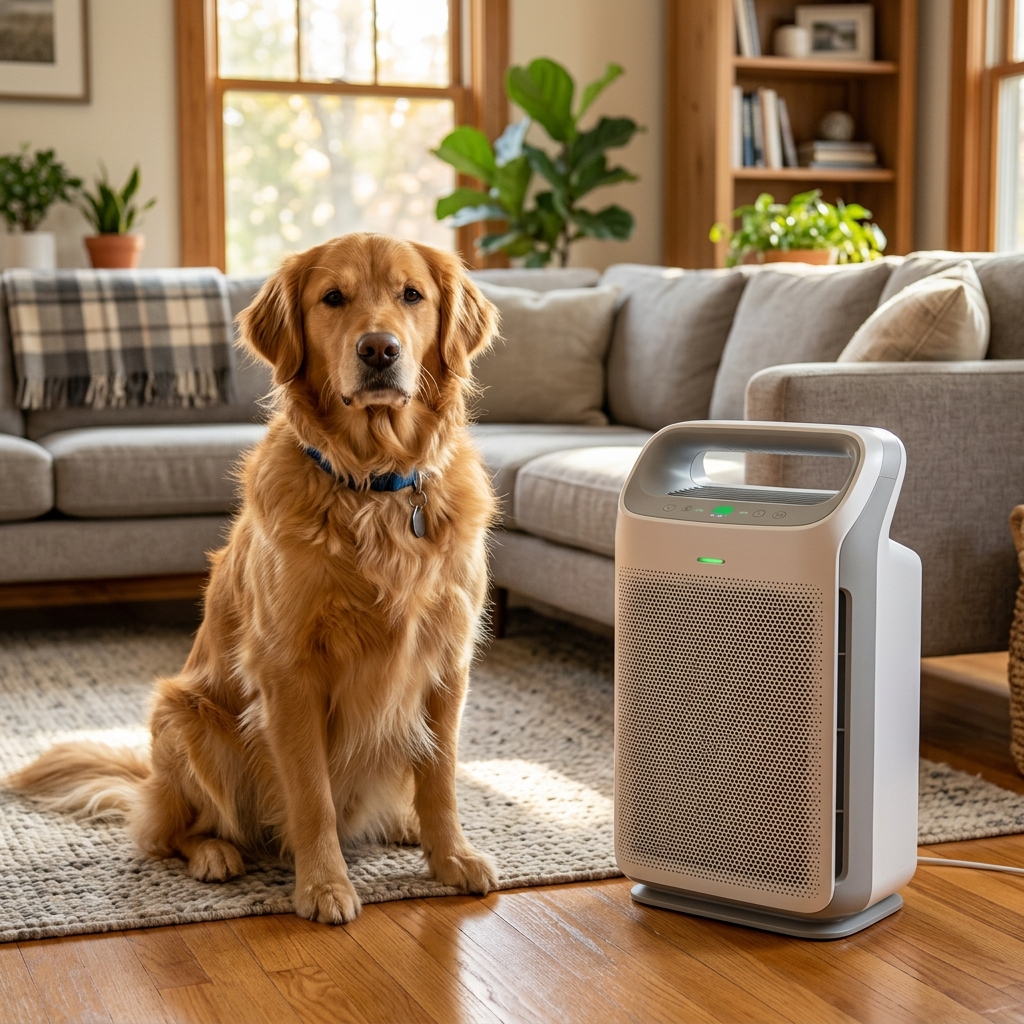
An effective air purifier for pet dander must run continuously on a medium or high fan setting to capture these sticky particles before they cling to household surfaces. Keep in mind, however, that purifiers cannot capture dander that has already settled onto carpets or furniture, meaning regular vacuuming is still required.
Defending Your Home Against Seasonal Pollen
Pollen grains are seasonal outdoor allergens that enter your home through windows, doors, and clothing. These particles vary in size from 10 to 100 microns and can cause immediate respiratory issues. A dedicated pollen air purifier should be placed near high-traffic entryways or open windows to catch these incoming particles before they spread into your main living areas.
Top-Rated Air Purifiers for Allergy Relief
Investing in an independently tested, high-performance air purifier is key to establishing a clean, allergen-free breathing zone in your home.
Look for Independent Scientific Certifications
Avoid relying solely on manufacturer claims. Look for units certified by independent testing bodies like the Association of Home Appliance Manufacturers (AHAM) or those scientifically proven to reduce allergen exposure.
To view a database of evaluated and approved units, reference the list of AAFA certified air cleaners.
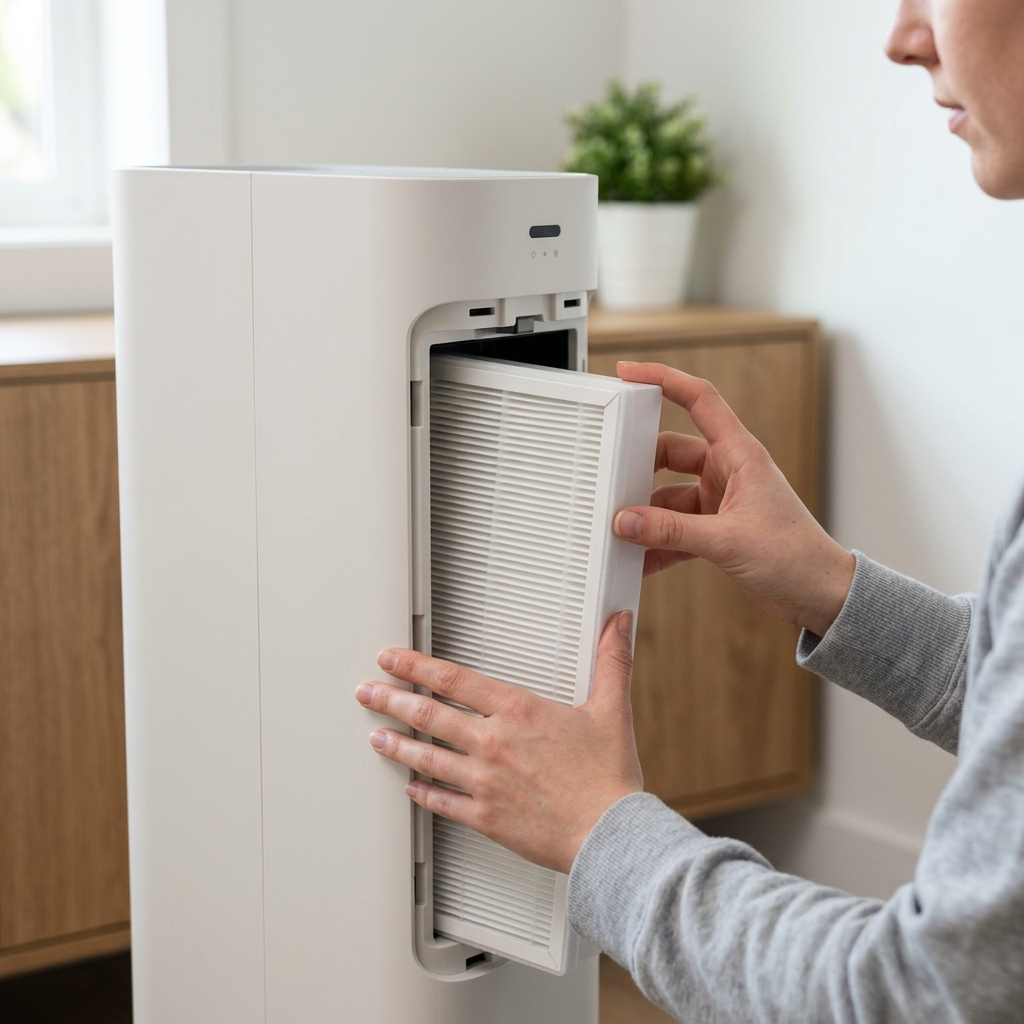
Alen BreatheSmart 75i Large Room Air Purifier
The Alen BreatheSmart 75i is designed to clean up to 1,300 square feet twice per hour. This unit operates at a low, non-disruptive frequency, making it an excellent choice for large master bedrooms or open-concept living spaces.
Trade-offs and Costs: The initial investment is relatively high, and replacement filters require a recurring annual cost. Additionally, its larger size means it requires dedicated floor space in your room.
Blueair Classic Pro CP7i HEPA Air Purifier
The Blueair Classic Pro CP7i utilizes electrostatic charging combined with mechanical filtration to capture fine particles without restricting airflow. This design allows for rapid air cleaning and excellent energy efficiency.
Trade-offs and Costs: Because this unit uses electrostatic charging, it must be cleaned regularly to prevent dust buildup on its internal charging grids. It also features a utilitarian, industrial look that may not blend easily with classic home decor.